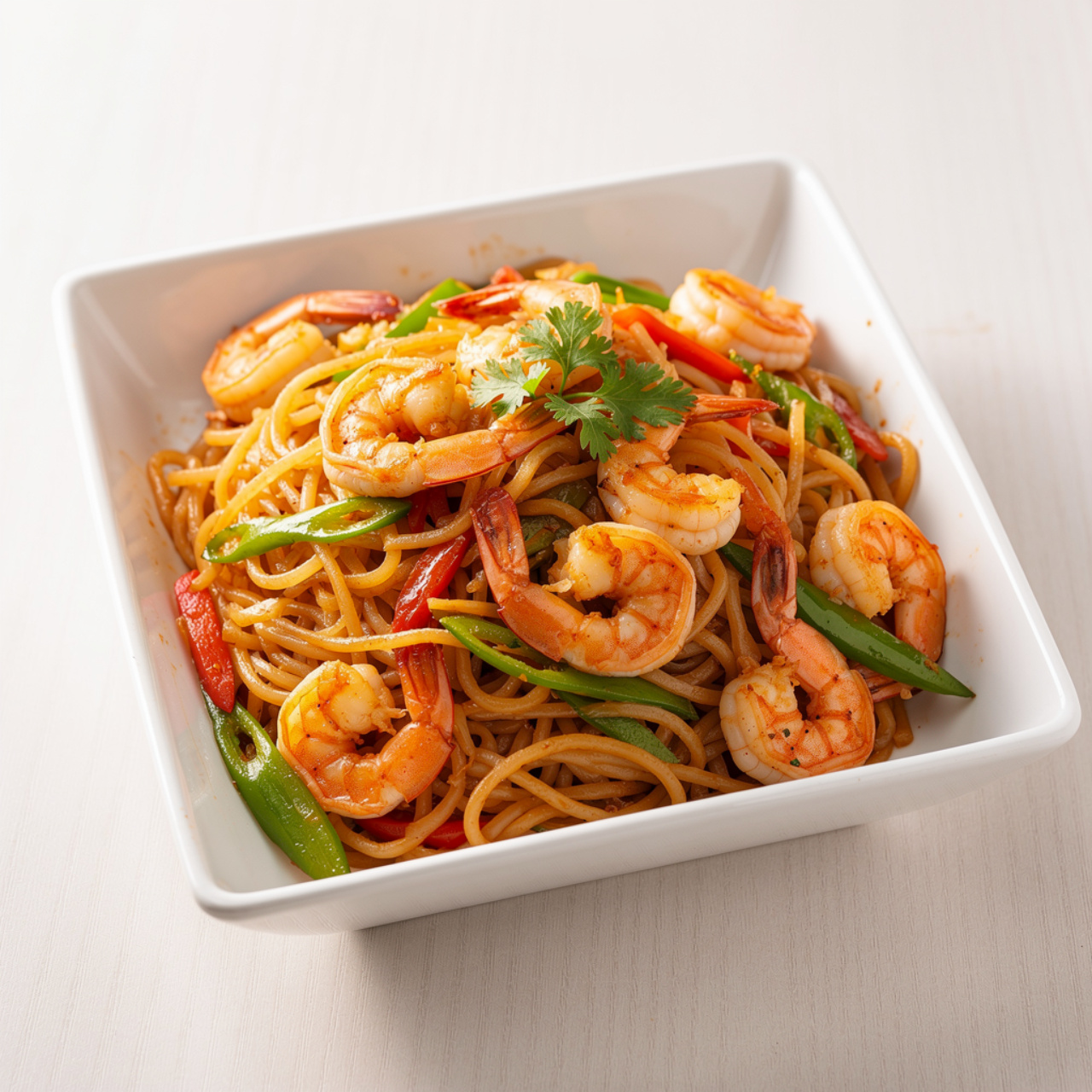
Shrimp Stir Fry with Rice Noodles
This easy shrimp stir fry with rice noodles comes together in under 30 minutes with a savory, glossy sauce and crisp vegetables. A naturally gluten-free rice noodle dish the whole family will love.

The Weeknight Stir Fry That Actually Delivers
Some dinners feel like a compromise. This is not one of them. This shrimp stir fry with rice noodles is the kind of meal that feels restaurant-worthy but comes together on a regular Tuesday night in about 30 minutes. Silky, chewy noodles. Plump, perfectly cooked shrimp. Crisp vegetables coated in a savory, slightly sweet, glossy sauce. It hits every note.
If you have been searching for easy rice noodle stir fry recipes that do not sacrifice flavor for speed, this one is for you. And because rice noodles are naturally gluten-free, this dish works beautifully for anyone navigating gluten-free cooking without wanting to feel like they are missing out.
Why Rice Noodles Are the Star
Rice noodles have a texture that is genuinely unique. They are silkier than wheat noodles, lighter than pasta, and they absorb sauce in a way that makes every single bite flavorful rather than just saucy on the outside. They are the backbone of so many beloved Asian rice noodle recipes, from pad thai to pho, and they work just as brilliantly in a quick weeknight stir fry.
For this recipe, medium-width rice noodles are the sweet spot. They hold up to high-heat tossing without falling apart, and they have enough body to stand alongside the shrimp and vegetables rather than disappearing into the background.
Chef's Tip: Do not over-soak your rice noodles. You want them pliable and bendy, not soft and fully cooked, before they hit the wok. They will finish cooking in the pan and absorb the sauce beautifully. Over-soaked noodles turn mushy and clump together.
The Sauce: Simple, Bold, and Balanced
A great gluten-free noodle stir fry lives and dies by its sauce, and this one is built on a handful of pantry staples that come together into something genuinely crave-worthy. Tamari (or gluten-free soy sauce) brings the deep, salty umami backbone. Oyster sauce adds a rich, slightly caramelized depth. A touch of honey rounds out the salt, and rice vinegar cuts through with just enough brightness to keep everything from feeling heavy.
The cornstarch slurry is a small but important detail. It thickens the sauce just enough to cling to every noodle and vegetable without making things gloppy. Do not skip it.
For anyone following gluten-free rice noodle recipes strictly, just double-check your oyster sauce label. Many standard brands contain wheat, but gluten-free versions are widely available and taste just as good.
Using quality tools and pantry staples makes a noticeable difference in a fast stir fry like this, where every element needs to perform at high heat in a short window of time.
The Stir Fry Technique That Changes Everything
The single biggest mistake people make with stir fry recipes with rice noodles at home is using too low a heat. A proper stir fry needs a screaming hot wok or large skillet. That intense heat is what gives you those slightly caramelized edges on the shrimp, the crisp-tender bite in the vegetables, and the light char on the noodles that you just cannot replicate at medium heat.
Here is the game plan:
- Cook the shrimp first and get them off the heat while they are just barely done. They will finish warming through at the end.
- Stir-fry the vegetables in stages, starting with the ones that take longest (broccoli) and adding the quicker-cooking ones after.
- Add the noodles and sauce last, tossing everything together quickly so the noodles absorb the sauce without overcooking.
- Return the shrimp at the very end, just long enough to heat through.
This method keeps every component at its best texture rather than everything becoming one sad, overcooked pile.
Chef's Tip: Have every single ingredient prepped and ready before you turn the heat on. Stir fry moves fast. There is no time to chop garlic once the wok is hot. Mise en place is not just a fancy restaurant concept here. It is genuinely what stands between a great stir fry and a stressful one.
Customize It to Your Kitchen
One of the best things about this easy rice noodle stir fry is how flexible it is. Think of this recipe as a reliable framework you can build on.
Swap the protein: Thinly sliced chicken, beef sirloin, or extra-firm tofu all work wonderfully in place of shrimp.
Change the vegetables: Baby bok choy, shredded cabbage, mushrooms, edamame, or julienned carrots are all fantastic additions or substitutions depending on what is in your fridge.
Adjust the heat: The chili garlic sauce is optional but encouraged. Start with a teaspoon and work up from there.
Make it even lighter: Swap the honey for a small drizzle of maple syrup, or leave it out entirely if you prefer a more purely savory profile.
This is the kind of gluten-free rice noodle dish that becomes a regular rotation recipe because it adapts to whatever you have on hand.
Ready to bring it all together? Here is the full step-by-step recipe:
Shrimp Stir Fry with Rice Noodles
This easy shrimp stir fry with rice noodles comes together in under 30 minutes with a savory, glossy sauce and crisp vegetables. A naturally gluten-free rice noodle dish the whole family will love.
Ingredients
- 8 oz rice noodles, medium width, soaked according to package directions
- 1 lb large shrimp, peeled, deveined, tails removed
- 1 tbsp sesame oil, toasted
- 2 tbsp vegetable oil, divided
- 4 garlic cloves, minced
- 1 tbsp fresh ginger, peeled and grated
- 1 red bell pepper, thinly sliced
- 2 cups broccoli florets, cut into small pieces
- 1 cup snap peas, strings removed
- 3 green onions, thinly sliced, whites and greens separated
- 3 tbsp gluten-free soy sauce or tamari, use tamari for strictly gluten-free
- 2 tbsp oyster sauce, use gluten-free oyster sauce if needed
- 1 tbsp rice vinegar
- 1 tbsp honey
- 1 tsp cornstarch, mixed with 2 tbsp water to make a slurry
- 1 tsp chili garlic sauce, optional, for heat
- 1 tbsp sesame seeds, for garnish
- 1/4 cup fresh cilantro, roughly chopped, for garnish
- 1 lime, cut into wedges for serving
Instruction
Soak the rice noodles in warm water for 10 to 12 minutes, or according to package directions, until pliable but not fully soft. Drain well and set aside.
In a small bowl, whisk together the tamari, oyster sauce, rice vinegar, honey, chili garlic sauce (if using), and the cornstarch slurry. Set the sauce aside.
Pat the shrimp dry with paper towels and season lightly with salt and pepper.
Heat 1 tablespoon of vegetable oil in a large wok or skillet over high heat until shimmering. Add the shrimp in a single layer and cook undisturbed for 1 to 1.5 minutes per side until pink and just cooked through. Transfer to a plate and set aside.
Add the remaining tablespoon of vegetable oil to the wok. Add the broccoli florets and stir-fry for 2 minutes until they begin to turn bright green.
Add the red bell pepper, snap peas, white parts of the green onions, garlic, and ginger. Stir-fry for 2 to 3 minutes until the vegetables are crisp-tender and fragrant.
Add the drained rice noodles to the wok and pour the sauce over everything. Toss and stir constantly for 1 to 2 minutes until the noodles are evenly coated and the sauce has thickened slightly.
Return the cooked shrimp to the wok and drizzle with the sesame oil. Toss everything together for 30 seconds to heat the shrimp through.
Remove from heat and transfer to a serving platter. Garnish with sesame seeds, green onion tops, and fresh cilantro. Serve immediately with lime wedges on the side.
Equipment
- Large wok or 12-inch skillet
- Large mixing bowl (for soaking noodles)
- Small bowl (for sauce)
- Colander or strainer
- Tongs or wooden chopsticks
- Microplane or box grater (for ginger)
- Sharp chef's knife and cutting board
Notes
Serving, Storing, and Making It Ahead
Serve this stir fry immediately straight from the wok, piled into bowls with a squeeze of fresh lime and extra sesame seeds on top. The lime is not optional in our house. That little hit of acidity at the end ties every flavor together.
Leftovers keep in an airtight container in the refrigerator for up to 3 days. Reheat in a hot skillet with a splash of water or broth to loosen the noodles rather than using a microwave, which tends to make shrimp rubbery.
For a head start on busy nights, prep the sauce and chop all the vegetables up to 24 hours in advance. When dinnertime comes, the actual cooking takes about 10 minutes flat. That is faster than most delivery estimates.